Why Your Architecture Is More Vital Than Your Prose
Comprehending Entity-Based Discovery in modern search environments
Browse engines in 2026 run on a level of conceptual understanding that makes traditional keyword optimization appearance primitive. Instead of matching specific words to a page, modern-day algorithms recognize the entities-- people, locations, and distinct ideas-- within a piece of material. This shift toward semantic search means that significance is now figured out by how well a piece of composing draw up the relationships in between these entities. In the local market, organizations have actually discovered that mere repeating of terms no longer ensures presence. Instead, the focus has actually turned towards building a clear understanding map within the content itself.Entity-based optimization focuses on ensuring a search engine can determine exactly what a page is about with no obscurity. If a website discusses specialized technical solutions, the engine tries to find associated entities that naturally cluster around that subject. If those clusters are missing out on, the search engine might have a hard time to categorize the page correctly. This is not about adding more words; it is about adding the right connections. Success typically depends upon how successfully a site incorporates Asia Virtual Solutions Analysis into its broader information structure.The way search engines parse language has altered considerably by 2026. Natural language processing designs are now efficient in understanding intent with nearly human-level precision. They can distinguish in between a user looking for general details and one prepared to make a transaction, even if the phrasing is identical. This is why content in the surrounding region must be structured to address particular "how" and "why" questions instead of just "what.".
The Evolution of Semantic Significance and Intent
The core of this advancement depends on semantic relevance. In 2026, an algorithm does not simply see the word "apple" and guess its meaning based upon surrounding keywords. It looks for the presence of attributes and related entities to identify if the text describes a fruit, a technology company, or a record label. This disambiguation is the foundation of modern search. Organizations offering specialized industry solutions guarantee their content supplies enough contextual markers to eliminate any doubt about their focus.Traditional keyword density has actually been changed by entity density. This metric procedures the variety and relevance of concepts connected to a main topic. An article about high-quality professional assistance in the regional area is anticipated to mention specific market requirements, regulative bodies, and typical technical obstacles. These discusses act as self-confidence signals for online search engine, validating that the content is authoritative and detailed.Many companies now focus on Asia Virtual Solutions Analysis as a core part of their growth technique. This includes a shift in how information is presented to make sure that automated systems can precisely categorize the underlying intent and proficiency. By 2026, the focus has moved from "strings to things," where the "thing" is a special entry in an online search engine's understanding graph.
Structure Knowledge Graphs with Structured Data

Schema markup in 2026 is no longer just for generating abundant snippets in search engine result. It works as the primary way to state entities to the search engine's understanding chart. Utilizing JSON-LD to connect a short article to specific entities in Wikidata or other open-data repositories has actually become a standard practice for anyone looking for visibility in competitive environments. This technical layer supplies a bridge in between human-readable text and machine-readable data.When a page clearly mentions that its topic is a particular type of professional offering, and links that service to a particular area like the urban center, it lowers the work the online search engine has to do. This results in much faster indexing and more precise positioning in search engine result. In 2026, online search engine reward material that makes their job simpler.
Topical Authority and the Author Entity
By 2026, the principle of Author Entities has developed. Browse engines track the credibility of individual authors and brands throughout the web. This implies that a piece of material is judged not simply by its own benefits, but by the entity that produced it. Developing a strong author entity includes constant publication on particular subjects and having actually that work mentioned by other respectable entities.This develops a web of trust that is much harder to manipulate than old-fashioned backlinks. For businesses in the surrounding region, belonging to the digital conversation implies appearing in local directory sites, news reports, and community discussions that online search engine can crawl and index. These unlinked discusses are typically as important as conventional links since they reinforce the brand's existence as a genuine entity within a specific geographical and topical context.
The Function of Semantic Triples in 2026 Material
To understand how online search engine classify material in 2026, take a look at making use of semantic triples. These are the standard foundation of details: topic, predicate, and object. For example, "professional consultation supplies company development." When content is composed with these clear relationships in mind, algorithms can map the information into an understanding graph with high confidence.Clarity is why rambling or improperly structured content stops working to rank in modern search results, even if it includes the appropriate keywords. The engine requires to see the connections to confirm the facts. Written material that does not have these rational links is often considered as low-grade or AI-generated filler, even if a human wrote it.
Enhancing for Multi-modal Semantic Search
Search in 2026 is not restricted to text. It includes images, video, and audio. Semantic search now applies to these formats. An image of a professional setup in the metropolitan area is evaluated for the entities it includes-- the tools, the environment, and the brand name identifiers. Content developers need to guarantee that their visual properties are as semantically clear as their writing.
- Use descriptive file names that include relevant entities.
- Ensure alt text identifies the particular objects and actions in an image.
- Surround media with text that enhances the entities revealed in the visual.
- Usage video transcripts that use clear, entity-rich language.
This multi-modal approach guarantees that search engines can comprehend the content no matter how the user is searching. Whether someone uses a voice command, a camera search, or a standard text question, the underlying entity map stays the exact same.
Effect of Zero-Click Search on Entity Method
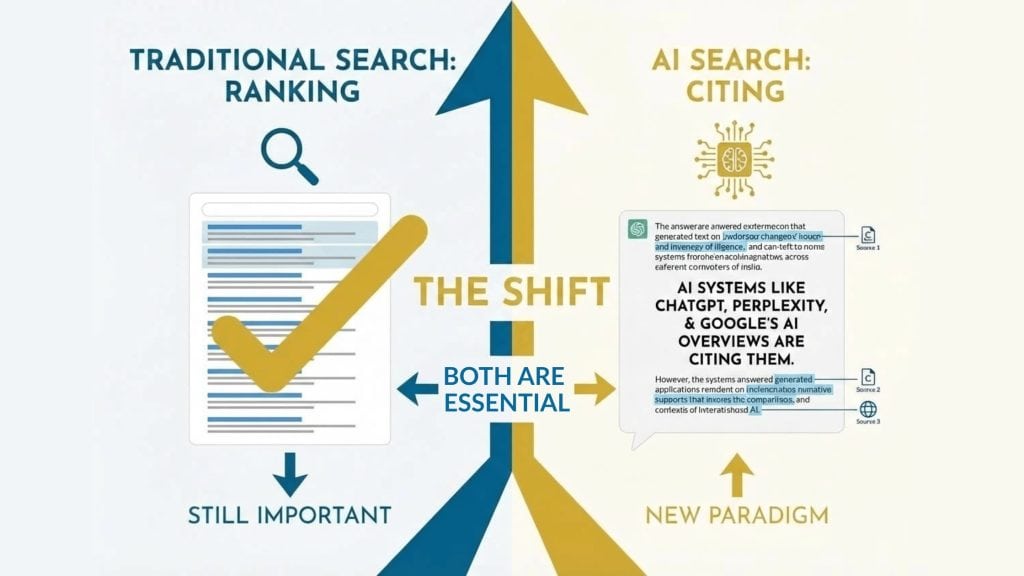
As online search engine supply more direct answers in 2026, the objective of material has actually moved from simply getting clicks to ending up being the conclusive source for those answers. This is where entity significance becomes critical. If an article about technical repairs is selected as the main source for an online search engine's AI-generated summary, that company becomes a reliable entity in the eyes of the algorithm.Achieving this status needs a precise technique to topical depth. Content needs to cover not simply the primary subject, but all the peripheral entities that a user might ask about. In local neighborhoods, this implies consisting of information about regional regulations, weather influence on the service, or local choices. This depth signals to the search engine that the page is the most extensive resource readily available.
User Intent Layers in 2026
In 2026, search intent is classified into unique layers. An inquiry for specialized assistance might be translated as an ask for a definition, a price comparison, or a company nearby. Content that is successful in the local area is content that addresses several layers of this intent. Instead of one page for one keyword, websites now construct comprehensive entity hubs that act as a single resource for every single element of a topic.This approach involves:.
- Specifying the core entity and its primary function.
- Discussing the relationship between the service and common user issues.
- Offering data-backed proof of the entity's efficiency.
- Linking the topic to other relevant regional or industry-specific entities.
By covering these layers, a website guarantees it remains relevant throughout the whole search process, from initial discovery to the final choice. The ongoing dependence on Asia Virtual Solutions Analysis stays a significant consider how pages are ranked throughout different search platforms in 2026.
The Future of Geographic Entities in Regional Browse
In any metropolitan area, regional search has ended up being extremely entity-dependent. Online search engine try to find discusses of local landmarks, neighborhood names, and regional occasions to anchor a service to a specific geographical entity. If a service supplier in the local region wishes to appear for localized queries, they need to go beyond adding a city name in a footer.They requirement to weave these local entities into the narrative of their content. Discussing a task completed near a particular landmark or going over how regional weather condition patterns impact their specific industry assists the online search engine validate the organization's regional relevance. This geographical anchoring is an essential part of semantic search optimization in 2026, ensuring that the ideal people find the right services at the best time.